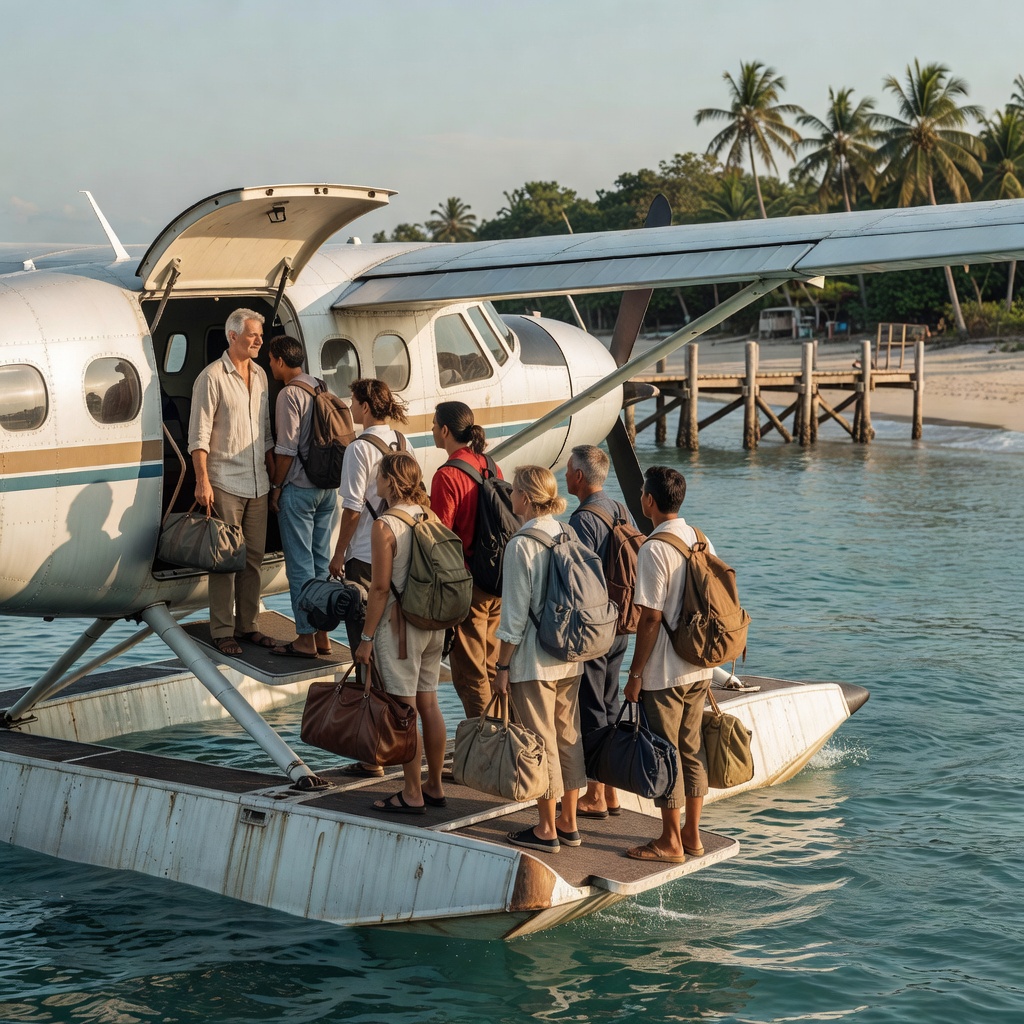
From a small aircraft, an island chain can appear like a map made of water, reef and scattered green. Shallow lagoons shift from pale sand tones to deeper greens; reef edges draw fine lines below the surface; clouds leave moving shadows on the sea. It is tempting to imagine that every crossing is a sightseeing flight. In reality, a seaplane transfer is first a transport operation. The view is a remarkable companion, not a promised itinerary.
Let the landscape come into focus
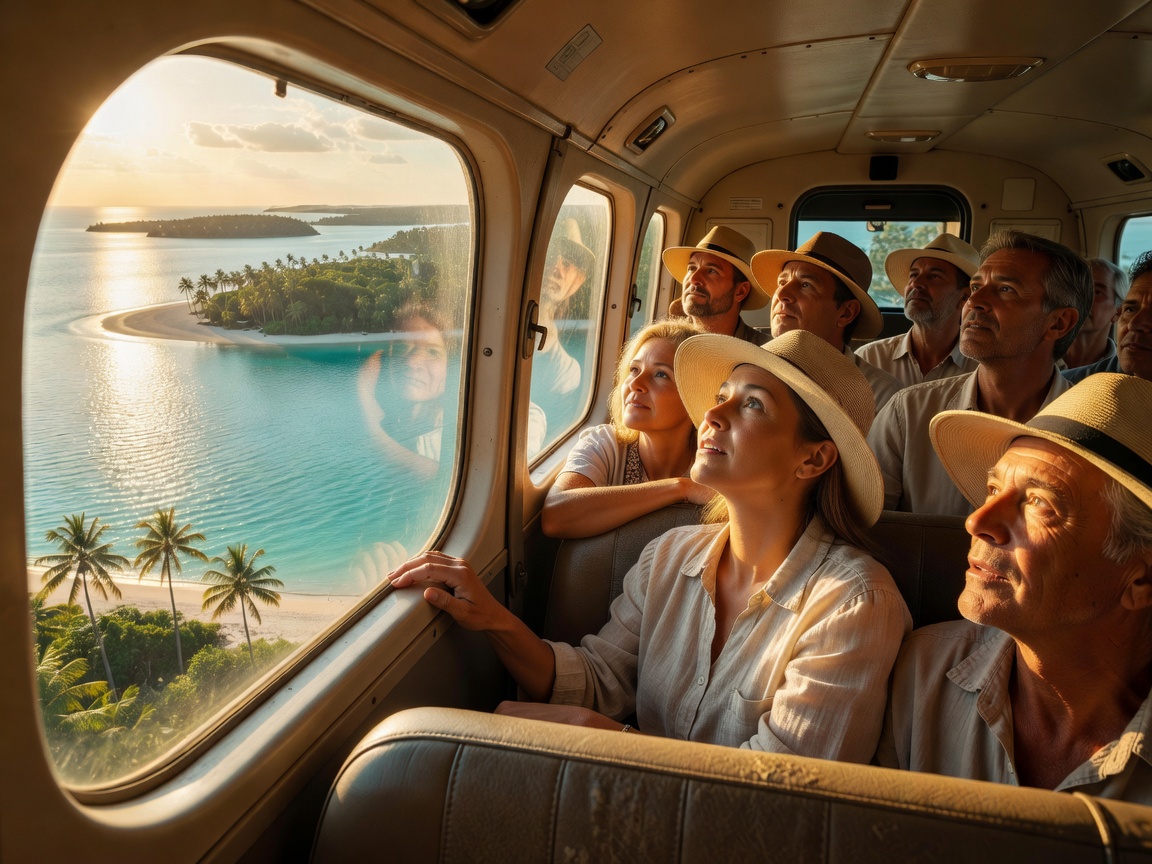
Light changes the character of a view. Early or late sunlight may lengthen shadows and emphasize reef contours; high, bright conditions can reveal the contrast between shallow water and open sea. Cloud cover softens colour and can make the horizon less distinct. These are observations, not a forecast: weather, route, aircraft, seat position and operational considerations all influence what you see.
Choose a seat based on comfort and the operator’s instructions, not a guarantee of a particular panorama. On some aircraft, seat allocation is affected by passenger and baggage weight or balance. A pilot or ground team may need to adjust seating for safe loading. If a specific view matters to you, ask politely whether preferences can be noted, then accept that they may not be possible. Keep the cabin clear and follow crew guidance throughout boarding and flight.
Scenic does not mean fixed
A direct transfer may follow a route that suits the destination, operating conditions and other passengers. Shared journeys can include stops or collections, and a change in weather can affect timing or routing. An operator is not obliged to make a detour for sightseeing, and the pilot’s judgement takes priority over a preferred view. If you want a dedicated scenic excursion, ask whether one is formally offered, what route it covers, how long it lasts and what weather policy applies. Do not infer a tour from the fact that the aircraft is flying over beautiful water.
Windows can be affected by glare, reflections or condensation. A simple habit is to keep camera equipment ready but unobtrusive, and to avoid leaning against or obstructing the window. Use a cloth suitable for your own glasses or camera, not the aircraft window. Ask before photographing fellow passengers or crew. Respect for the people sharing the cabin is part of enjoying the journey.
Make room for the moment
When you know where the next transfer begins, you have more attention to spare for the view. Store essentials so you do not need to unpack in the cabin, follow baggage instructions and listen for the arrival briefing. If you are prone to motion discomfort, ask a healthcare professional or operator about appropriate preparation well before departure. Keep water and any personal essentials within the permitted reach, while following cabin safety instructions.
Think of the flight as a sequence: the pre-departure pause, the changing angle of the water, the sight of an island appearing at the edge of the frame, then the approach to a landing area. Those transitions are often more memorable than a single postcard moment. Be present for what the route actually offers instead of measuring it against an imagined tour.
Photography with care
Natural light can make the sea look different from the way it appears to the eye. A camera may exaggerate contrast, flatten subtle colours or catch reflections. Take a few considered frames, then put the device away. Do not use flash unless explicitly permitted; it can distract other passengers. Follow any restrictions on recording, especially around airport, community or operational locations. At arrival, ask before photographing local residents and staff.
For travellers choosing a crossing, the best question is not simply, “Which side has the view?” Ask what kind of journey the operator expects that day, whether seating can be requested, and how the transfer links to your onward plans. A thoughtful answer recognizes that the route can be both practical and beautiful, without confusing possibility with certainty. The window between islands offers a rare perspective. It is best enjoyed with curiosity, flexibility and respect for the work that makes the flight possible.